Ontology and Semantics: The new world prepared for AI
Machine-speed AI threats and ungoverned development velocity are exposing a structural gap. Ontologies are the control plane executives need—not another dashboard.
In 2026, the threat model changed. Autonomous attack agents exploit zero-days and map supply chains in seconds. They do not respect perimeters—they exploit the gaps between silos, shadow AI connections, and code your teams never formally registered.
The Five Eyes joint warning this June was blunt: offensive and defensive cyber capability is now paced by frontier models, not quarterly security reviews. Inside the same enterprises, Vibe Coding is shipping unmapped modules to production faster than architecture can absorb them. We are accelerating creation without accelerating governance.
The visibility problem
The standard response—more observability, more alerts—has widened the gap it was meant to close. Engineering drowns in noise. The board still cannot translate technical liability into business risk in real time. When compromise happens at machine speed, monthly reviews and log archaeology are not a strategy.
The semantic answer
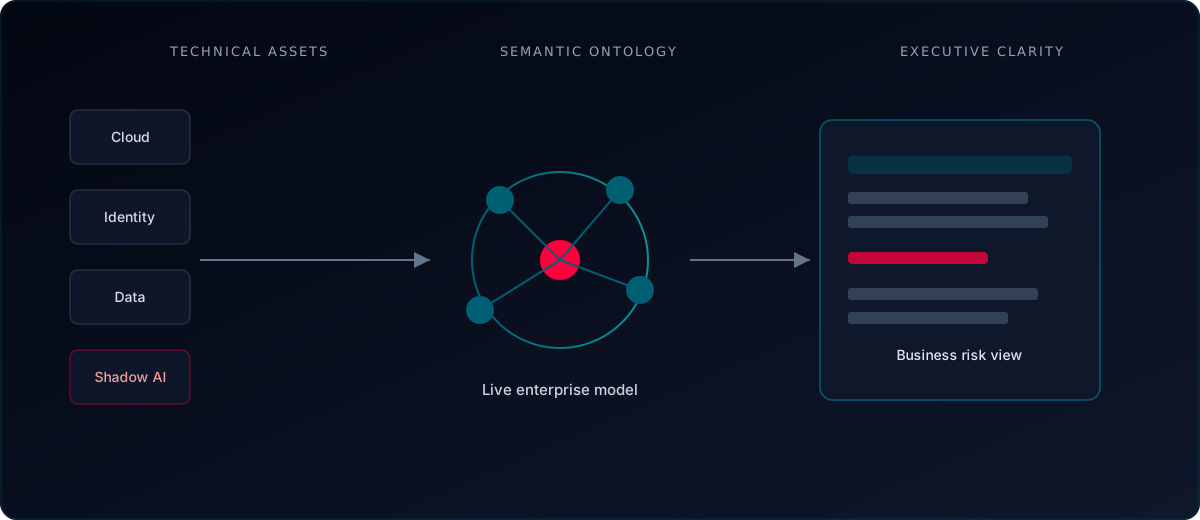
Semantic Engineering is not another tool layer. It is a universal ontology over your digital estate: every identity, workload, data store, and third-party model connection mapped as one live model.
Technical assets → Semantic ontology → Executive clarity
That model enables three things that matter now:
- Shadow AI control — see every data egress to external models before IP leaves the perimeter.
- Deterministic defense — isolate compromised resources by business blast radius, not by log correlation.
- Sovereignty with discipline — know where data lives, who accesses it, and what it costs, without a forensic project.
What leadership should do now
- Automate containment — response in milliseconds, not war rooms.
- Govern ingestion — register every model, vector store, and agent router in the estate; the perimeter is gone.
- Treat architecture as board liability — if risk cannot be read in business terms, the organization is exposed.
The winners will not be those who bought the most security software. They will be those who built structural clarity first—and can govern an estate they actually understand.